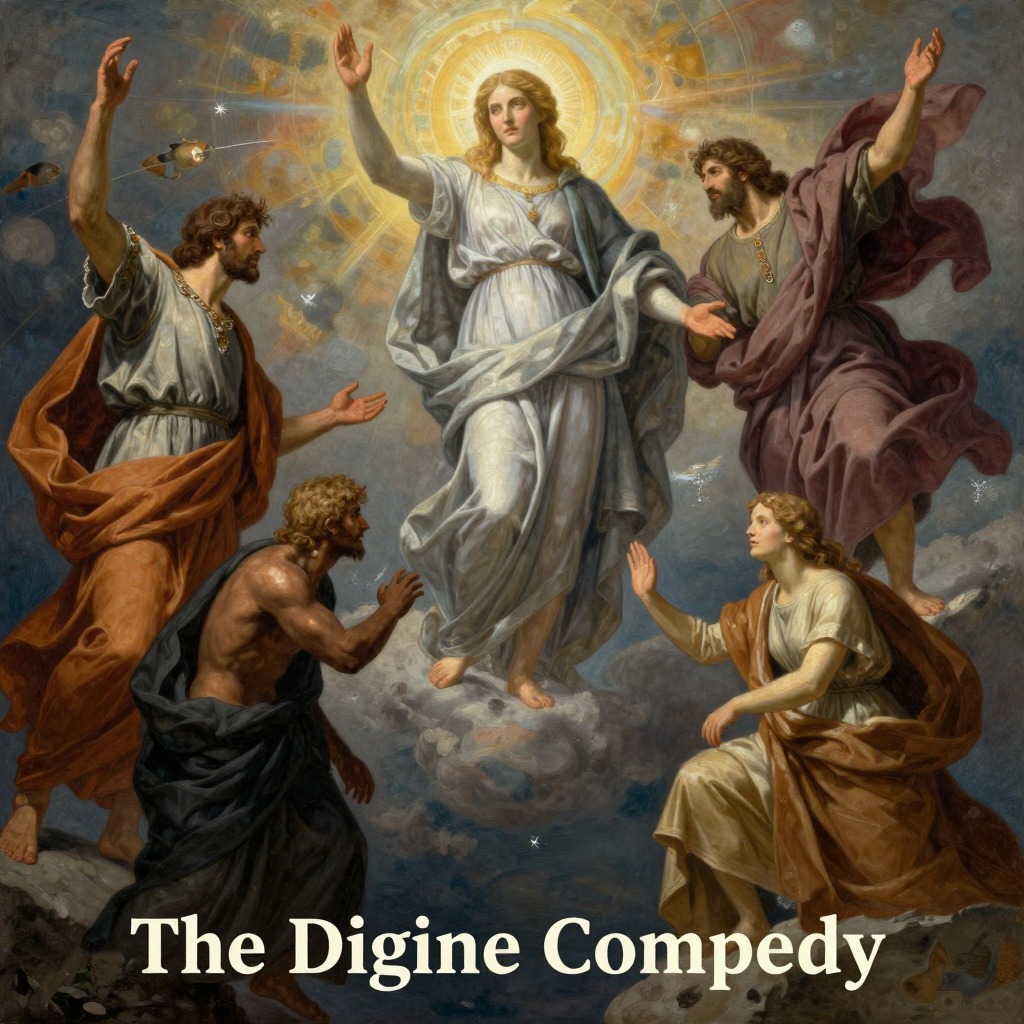
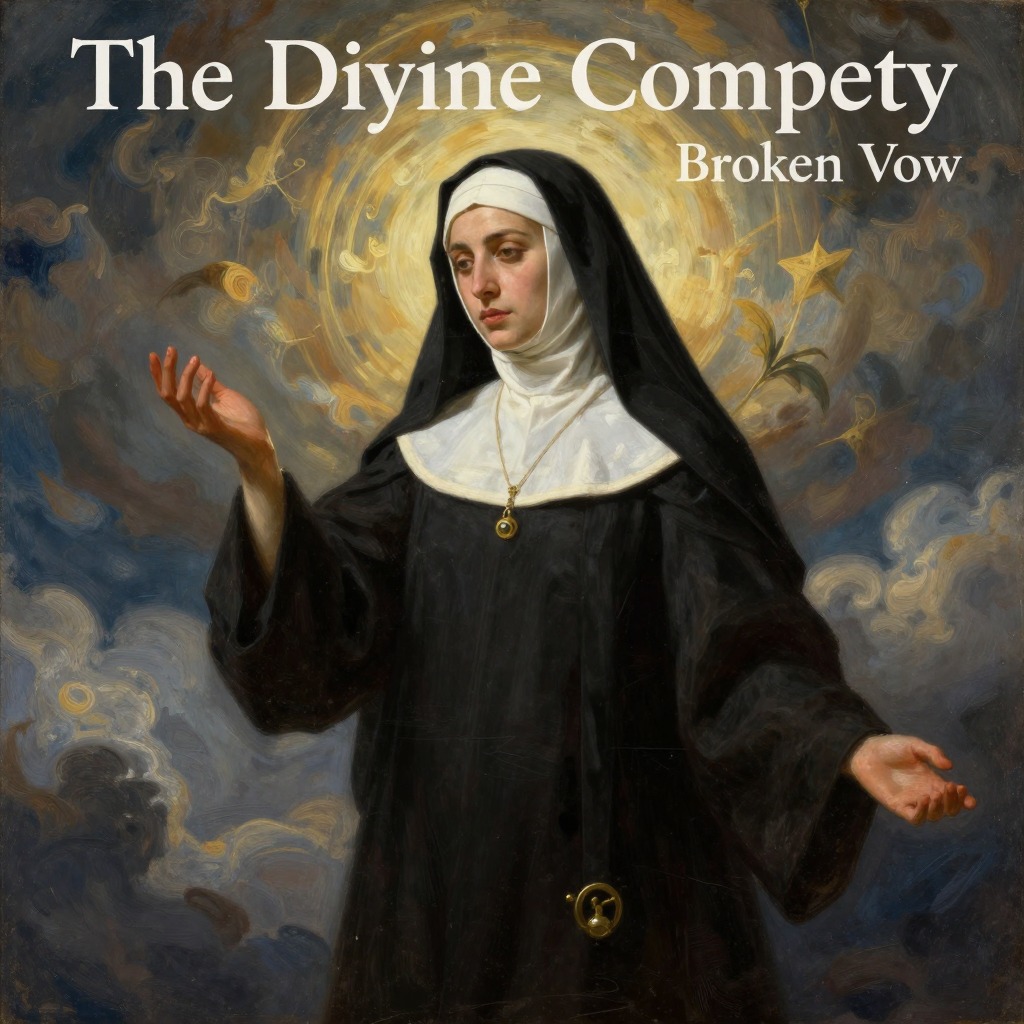
Piccarda and Constance
Piccarda Donati and Empress Constance are two of the first blessed souls Dante meets in Paradise, appearing in the Heaven of the Moon, the sphere assigned to those who, having taken sacred vows, were forced to violate them. Their presence in the slowest-moving heaven, farthest from the Empyrean, is not a mark of diminished blessedness but a demonstration that every soul in Paradise is perfectly content with its station, because the essence of beatitude is the complete conformity of one's own will to the will of God. Their encounter with Dante, and Piccarda's explanation of their condition, establishes the foundational principle that "In His will is our peace" — a peace that governs the entire celestial hierarchy and makes each soul rejoice in the exact degree of glory it has received.
Identity and Background
Piccarda Donati was a Florentine noblewoman and a nun who, as she tells Dante, "from the world I fled, and in her habit shut myself, and pledged me to the pathway of her sect." She was a member of the Franciscan Order, having taken vows under the rule of Saint Clare. Empress Constance, who appears beside Piccarda, was the heiress of the Norman kingdom of Sicily and the wife of the Holy Roman Emperor Henry VI; she too was a nun before being forced into marriage. Both women were torn from the religious life by men who had more regard for political advantage than for sacred vows. Piccarda states plainly that "men accustomed unto evil more than unto good, from the sweet cloister tore me." Constance, likewise, "was ta'en the shadow of the sacred wimple" from her head against her wishes and against good usage. Yet Piccarda insists that Constance "of the heart's veil she never was divested" — her inner commitment to her vow remained intact even when her body was compelled.
Life and Circumstance
Piccarda's life was shaped by the violent factionalism of Florence. She was the sister of Forese Donati, whom Dante meets among the gluttonous on the Sixth Terrace of Purgatory, and of Corso Donati, the leader of the Black Guelphs who would later drive Dante into exile. It was Corso who, according to historical tradition, dragged Piccarda from the convent of Santa Chiara in Florence and forced her into a political marriage. Piccarda tells Dante that she followed the rule of a lady "by whose rule down in your world they vest and veil themselves, that until death they may both watch and sleep beside that Spouse who every vow accepts which charity conformeth to his pleasure." The men who tore her from the cloister acted "accustomed unto evil more than unto good." Empress Constance, who was the mother of Frederick II, was also a nun before being compelled to marry Henry VI in order to secure the imperial claim to Sicily. Piccarda says of her: "A nun was she, and likewise from her head was ta'en the shadow of the sacred wimple. But when she too was to the world returned against her wishes and against good usage, of the heart's veil she never was divested."
The Nature of Their Beatitude
When Dante asks Piccarda whether she and the other souls in the Moon desire a higher place, "to see more or to make yourselves more friends," she smiles first with the other shades and then answers with a joy that seems to burn in the first fire of love. She explains that their will is quieted by the virtue of charity, which makes them wish only for what they have and gives them no thirst for more. To aspire to a higher station would be discordant with the will of Him who assigns their places. "Nay, 'tis essential to this blest existence to keep itself within the will divine, whereby our very wishes are made one." She then utters the line that becomes the motto of the entire Paradiso: "In His will is our peace." This peace, she says, is the sea toward which everything that is created and all that nature makes is moving. Dante realizes from her words that everywhere in heaven is Paradise, even though the grace of the Supreme Good does not rain down in equal measure.
The Question of Merit and Violence
Dante is troubled by a theological difficulty: if a good will is permanent, how can violence done by others decrease the measure of a soul's merit? Beatrice later resolves this doubt in the following canto. She explains that the will, unless it consents, is never quenched by force; it operates as nature does in fire, even if violence a thousand times distorts it. If the will yields more or less, it seconds the force. Piccarda and Constance, having the power to turn back to the holy place but not doing so, showed that their will was not perfectly solid. Beatrice contrasts them with Saint Lawrence, who remained fast upon his gridiron, and with Mucius Scaevola, who was severe to his own hand. "But such a solid will is all too rare." Piccarda, when she says she was torn from the cloister, means the absolute will, which never consented to evil; but the will that feared greater harm did yield, and therefore the souls are placed in the lowest heaven. Both women, however, are perfectly happy, because their present will is entirely one with God's.
Thematic Significance
Piccarda and Constance together embody the paradox that the lowest order of Paradise is still Paradise, and that the soul's contentment with its place is the very measure of its blessedness. Their story introduces the crucial distinction between the absolute will, which never consents to evil, and the conditional will, which may yield under duress — a distinction that preserves both the justice of God and the compassion due to human weakness. Piccarda's serene declaration that "In His will is our peace" becomes the theological anchor of the entire Paradiso, a phrase that Dante will echo in the final vision of God when his own desire and will are turned by the Love that moves the sun and the other stars. The two nuns, so faint in the Moon that Dante at first mistakes them for reflections, are the first proof that the celestial hierarchy is not a ladder of ambition but a circle of love, where every soul, from the lowest to the highest, possesses the whole of God in the measure that God gives, and rejoices in that measure without envy or regret.